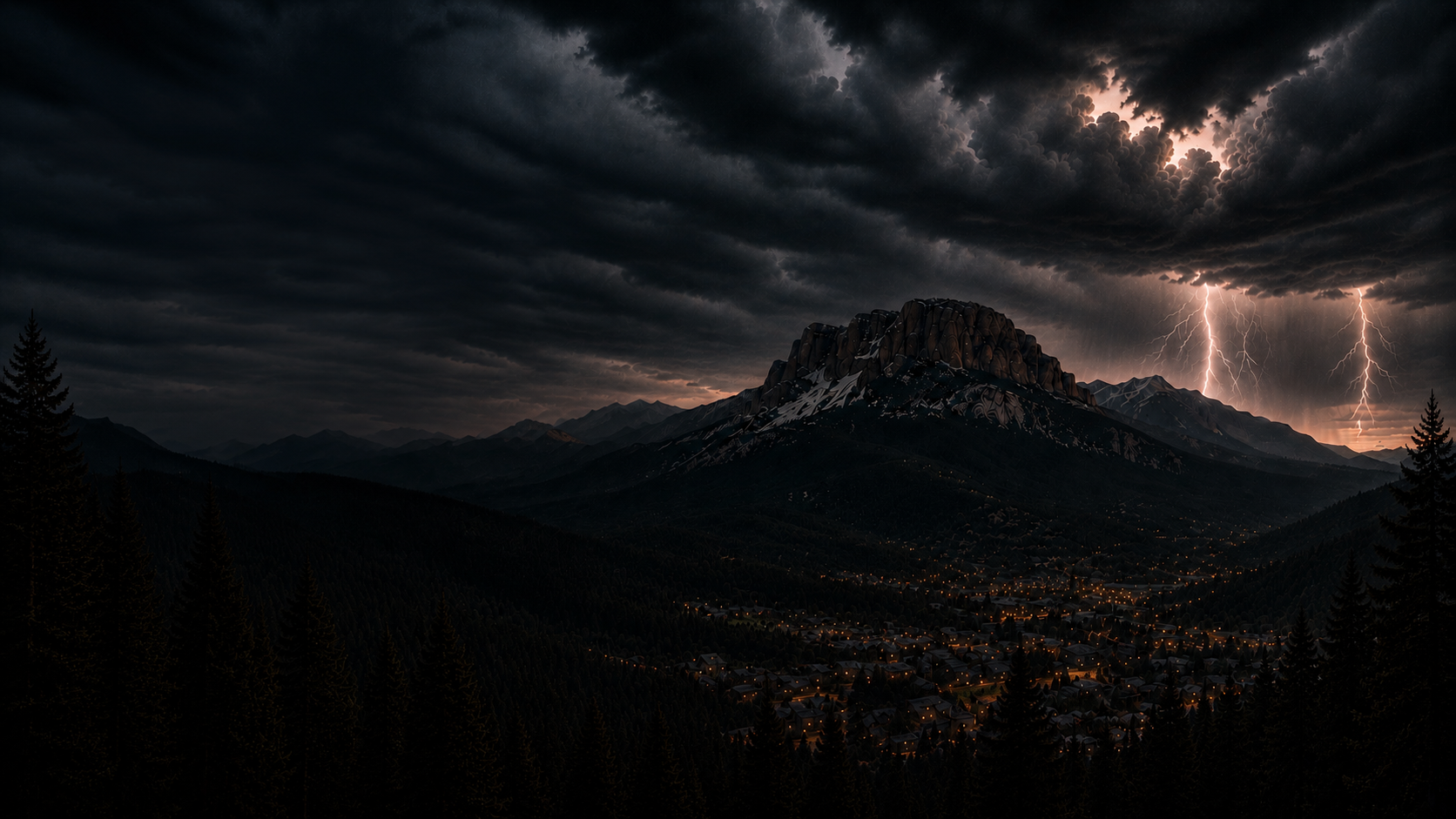
THREADBOUND
The Storm Without a Name
A woman vanished during a storm
that officially never existed.
Seven years later, the signal returned.
THREADBOUND: THE FREQUENCY
Episode 1: The Storm Without a Name
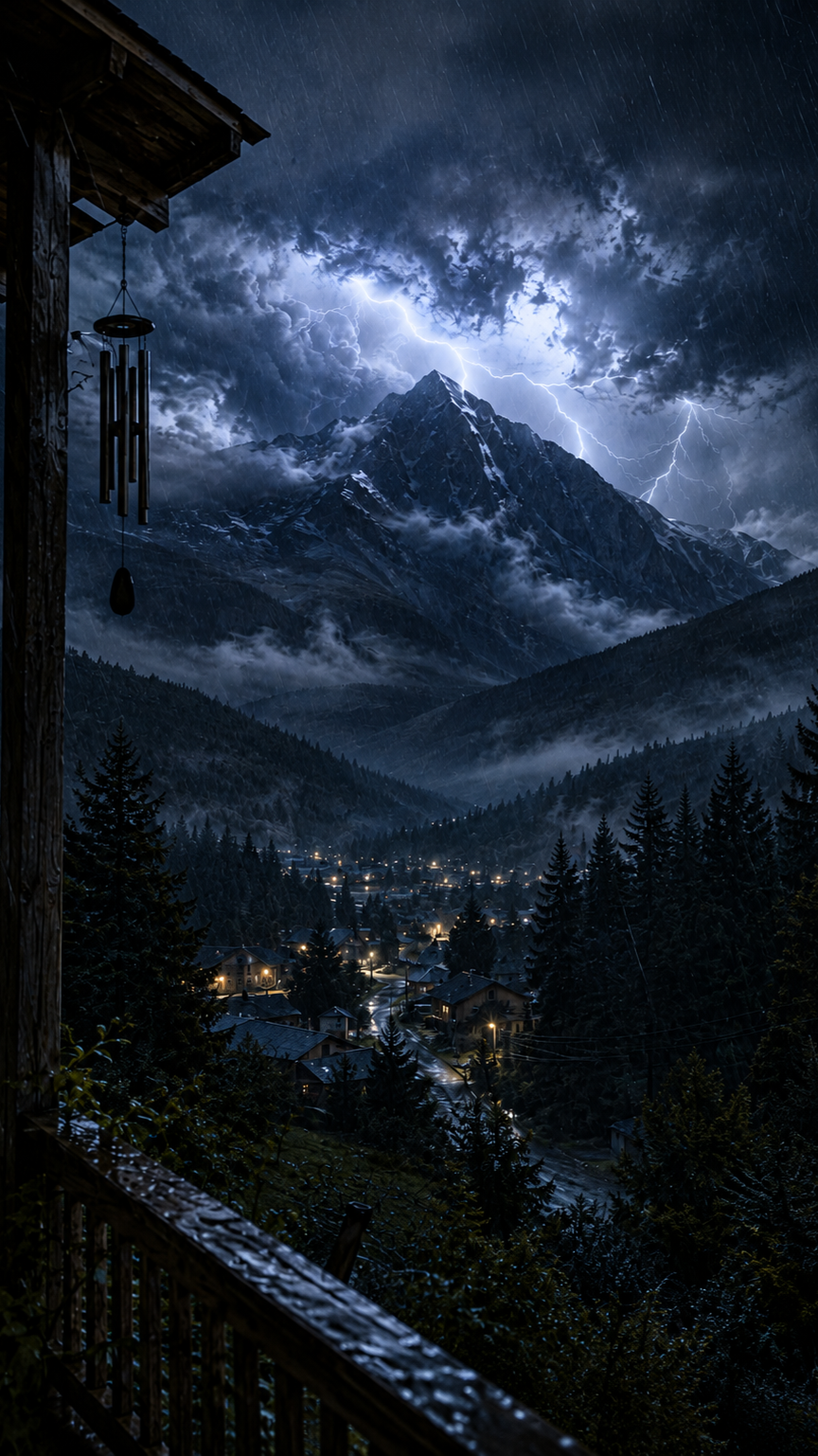
The storm had no name.
Years later, that was the detail Elias Vance remembered most clearly.
Not the lightning that tore open the sky above Blackroot Hollow.
Not the rain that struck the house hard enough to shake the windows.
Not even the white-gold light waiting beyond the trees.
It was the absence of a name.
Storms were recorded. They appeared on radar screens and weather reports. They triggered warnings, knocked down power lines, flooded roads, and gave people something official to point toward afterward.
Proof.
Even the smallest mountain squall left evidence behind.
The storm that took Rose left nothing.
No emergency alert had sounded that night.
No severe-weather warning had been issued.
County records showed scattered rain over the Colorado high country, but nothing strong enough to explain the damage around the Vance property. No lightning pattern matched what Elias remembered. No measured winds accounted for the broken branches scattered across the yard.
The neighbors could not even agree about what they had seen.
Some remembered thunder.
Some remembered rain.
Others claimed the night had been strangely quiet.
By sunrise, the storm had already begun disappearing from the world.
Rose disappeared with it.
Search teams crossed the property and surrounding forest. Deputies followed every road leading away from the house. Volunteers searched drainage channels, trails, creeks, abandoned structures, and the steep country climbing toward Singer’s Ridge.
Dogs were brought in.
They found no trail.
No footprints continued beyond the yard.
No clothing caught on branches.
No blood.
No evidence of a fall, struggle, vehicle, or second person.
Nothing.
There had been a woman standing beneath the trees.
Then there had not.
The world demanded an explanation, and when none appeared, it began creating them.
Rose had become disoriented.
Rose had wandered into the mountains.
Rose had suffered some kind of break.
Rose had left intentionally.
Elias answered every question until the questions began sounding like accusations.
Had they argued?
Was she unhappy?
Had she ever spoken about leaving?
Was there someone else?
Had she been taking medication?
He told them the truth.
Rose had not run away.
She had not wandered into the forest.
She had not chosen to leave him.
Something had happened in the storm.
Something impossible.
But impossible things did not fit neatly inside search reports.
They did not belong in newspaper articles or official statements. They could not be measured, photographed, or entered into a database. The impossible could be dismissed with a few careful words until the person describing it began to sound like the least reliable part of the story.
Eventually, the searches slowed.
Then they stopped.
Rose Vance became a case number, a faded photograph on a bulletin board, and a name people in Blackroot Hollow learned to speak softly.
The town continued around her absence.
Winter buried the valley.
Spring uncovered it.
Summer returned.
Autumn painted the mountains gold.
Singer’s Ridge remained above it all, silent and unmoving, while Elias learned how grief could become part of the architecture of a life.
He learned how a house could remain full of someone who was no longer there.
How a coffee cup could become unbearable.
How wind chimes could turn a quiet evening into a memory.
How every ordinary sound could make a man stop and listen for the one voice he wanted to hear.
For seven years, Elias waited for the storm to leave some final piece of evidence behind.
It never did.
But before the silence—
before the search teams, the questions, the missing-person posters, and the years measured by absence—
there had been Rose.
And on the final afternoon of their ordinary life together, she had been standing in their kitchen, stealing his coffee and listening to the wind chimes sing.
Seven years earlier, autumn had settled over Blackroot Hollow as though it belonged there.
Gold moved through the aspens. Cold gathered in the shadows before sunset. Woodsmoke drifted from chimneys while the roads wound between forests and granite slopes, following paths the mountains seemed only reluctantly willing to provide.
Blackroot Hollow occupied a narrow valley deep within the Colorado high country. Dense pines crowded its edges. Old ridgelines rose around it like walls, and cell service appeared or vanished according to rules no one had ever managed to understand.
Locals liked to say the town existed because the mountains allowed it to.
Weather arrived when it wanted.
Winter came early.
Spring came late.
Everyone adjusted.
Above the valley stood the Blackroot Range, its peaks worn by time, wind, and storms that could arrive without warning. One summit rose above the others.
Singer’s Ridge.
Its granite crown dominated the northern horizon. People could see it from nearly every porch, storefront, parking lot, and winding road in town. Those who had lived beneath it long enough barely looked anymore. It had become part of the ordinary rhythm of Blackroot Hollow, as familiar as the river beyond Main Street or the scent of pine after rain.
Rose never stopped looking at it.
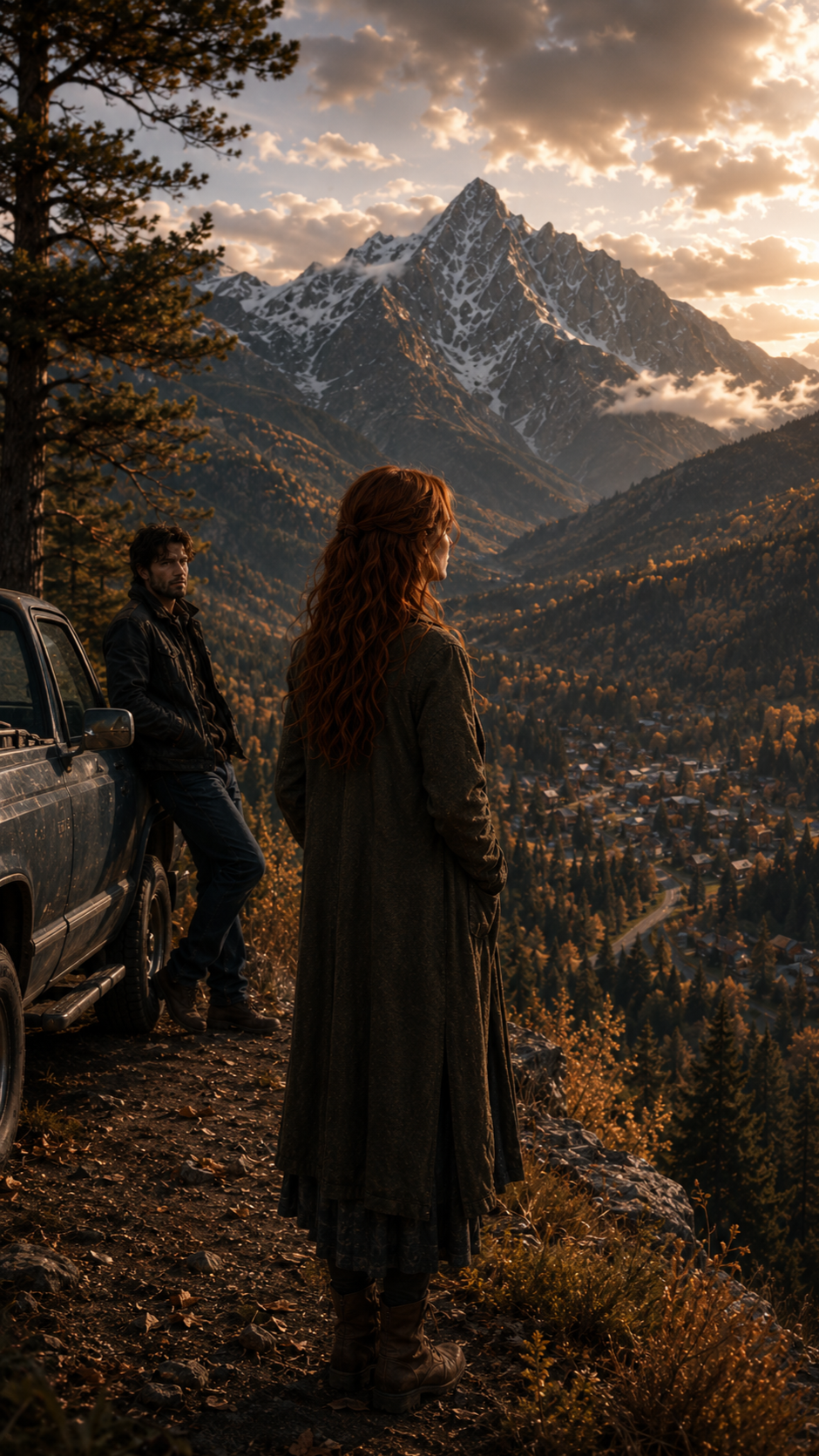
The first time Elias brought her to Blackroot Hollow, she asked him to pull over at the overlook outside town.
He expected her to take a photograph.
Instead, she stood near the edge for almost twenty minutes.
Her hands remained tucked inside her jacket pockets. The autumn wind moved through her auburn hair while she stared across the valley at Singer’s Ridge.
Cars passed slowly behind them.
Elias leaned against his truck and watched Rose instead of the mountain.
There were places people admired because they were beautiful. Rose looked at Singer’s Ridge differently. She did not seem impressed by it.
She seemed to be listening.
“You know it’s not going anywhere, right?” Elias finally said.
Rose smiled without looking back. “I know.”
“Then why are you staring at it?”
She did not answer immediately.
The wind moved through the pines below the overlook, carrying the scent of earth, fallen leaves, and distant woodsmoke. Sunlight touched the upper face of the ridge, turning portions of the granite bronze while the valley beneath it had already begun slipping into shadow.
Elias waited.
Rose tilted her head slightly, as though the right answer might be hidden somewhere inside the silence.
“It feels familiar.”
Elias laughed.
Not because he was mocking her. Rose said unusual things with such calm sincerity that sometimes laughter was the only reasonable response.
“You’ve never been here.”
“I know.”
“You’ve never even been to this part of Colorado.”
“I know that too.”
“Then how can it be familiar?”
Rose finally looked toward him.
Her expression was thoughtful rather than frightened. There was no certainty in it. No dramatic belief that the mountain had called her there or that some forgotten destiny waited beneath the trees.
Only recognition she could not explain.
“I don’t know,” she said.
That answer should have ended the conversation.
At the time, Elias allowed it to.
Rose turned back toward the ridge. Elias remained beside the truck, watching the late-afternoon light move across her face and hair.
He had known people who needed an answer for everything. Rose was not one of them.
She could live beside a question.
She could carry it for years, turning it slowly, listening to every possibility without forcing it to become something smaller merely because uncertainty made other people uncomfortable.
That was one of the things Elias loved about her.
It was also one of the things that would eventually lead her toward mysteries most people in Blackroot Hollow had learned not to notice.
The wind rose again.
A strand of hair moved across Rose’s face. She tucked it behind one ear but never took her eyes from Singer’s Ridge.
Elias pushed away from the truck.
“We should probably get going.”
Rose nodded but did not move.
“You said that like someone who has no intention of moving.”
“One more minute.”
“You said that ten minutes ago.”
“This is a different minute.”
“Of course it is.”
A small smile appeared at the edge of her mouth.
Elias opened the driver’s door and waited.
Eventually, Rose stepped away from the overlook. Before climbing into the truck, she looked back once more.
Not a final glance.
More like she was making sure the mountain was still there.
Years later, Elias would return to that memory again and again.
The sunlight on the ridge.
The cold autumn wind.
Rose standing at the edge of the valley with her hands in her pockets.
And the quiet conviction in her voice when she said the mountain felt familiar.
She never managed to explain what she meant.
Elias never forgot that she had said it.
Their house stood near the edge of Blackroot Hollow, where the forest seemed determined to reclaim everything people had built.
It was weathered blue, with uneven floorboards, unreliable plumbing, and a wraparound porch that creaked in every season. Rose had fallen in love with it immediately.
“It has character,” she had said.
“It needs professional intervention,” Elias had answered.
Both descriptions proved accurate.
The kitchen became the center of their life together. Meals happened there. Arguments began there and usually ended there. Holiday plans, grocery lists, abandoned projects, and mugs no one remembered using collected across every available surface.
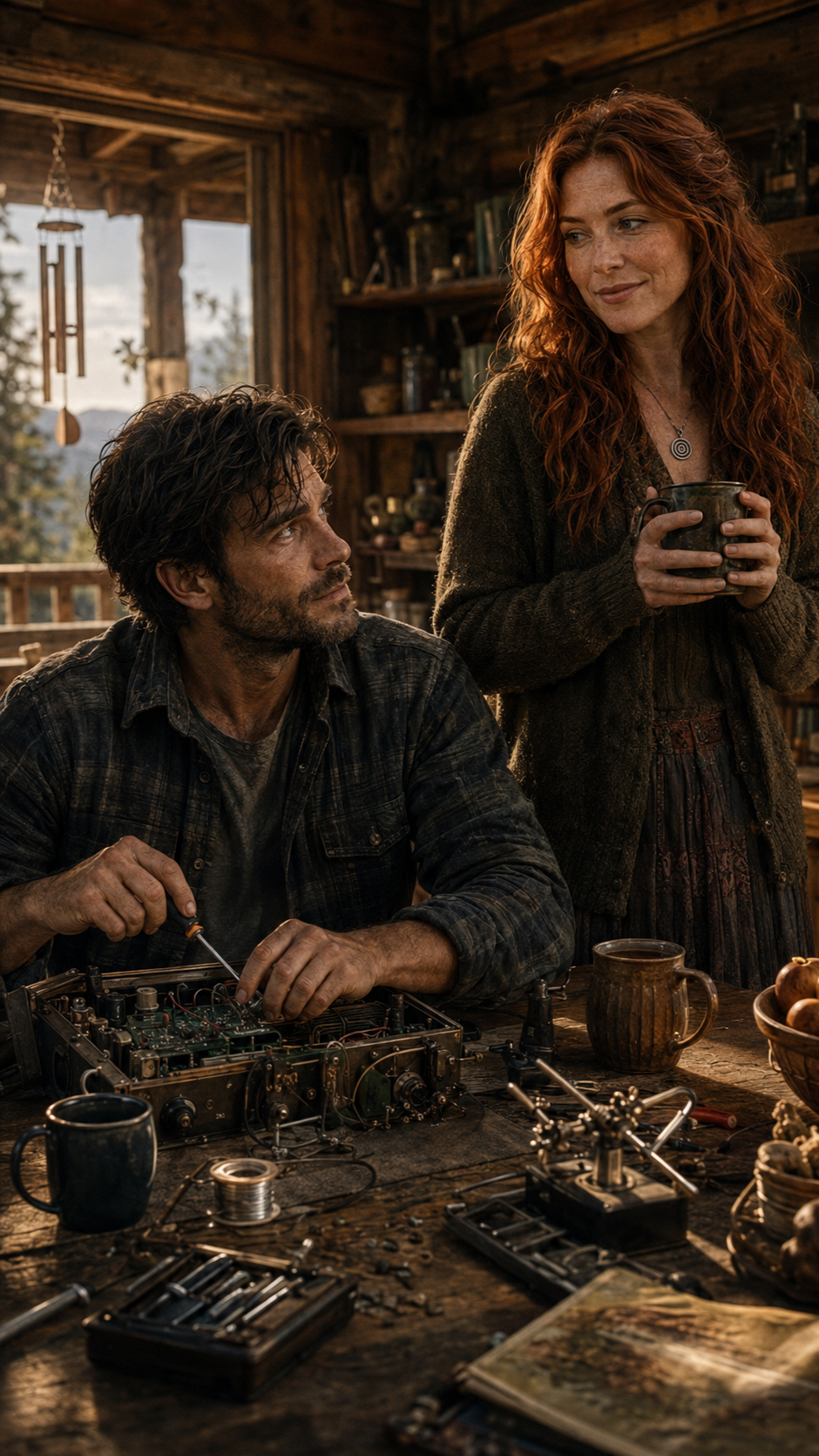
On that final afternoon, radio parts covered most of the kitchen table.
Elias sat hunched over a partially disassembled receiver, surrounded by circuit boards, loose wiring, hand tools, and three coffee mugs in various stages of abandonment. Late sunlight spilled through the window, filling the room with a soft autumn warmth.
Outside, the wind chimes sounded.
Rose looked up from the counter.
“There they are again.”
Elias kept his attention on the receiver. “There who are?”
“The chimes.”
“They’re wind chimes.”
“They’re singing.”
“They’re metal tubes hitting each other because air is moving.”
Rose gave him the expression she reserved for moments when his commitment to logic became personally offensive.
“You always ruin everything.”
“I fix things.”
“That’s different.”
He smiled despite himself.
Rose crossed the kitchen carrying a mug of tea. Sunlight caught the loose waves of her auburn hair, turning them copper at the edges. Her silver spiral pendant rested against her sweater.
She set the tea beside him.
Then she picked up his coffee and took a sip.
Elias slowly lowered his screwdriver.
“Did you just steal my coffee?”
Rose’s face tightened. “That is terrible.”
“You stole it.”
“I know.”
“Why?”
She considered this seriously. “Curiosity.”
“You already have tea.”
“I still have tea.”
“You like tea.”
“Very much.”
“Then drink the tea.”
Rose took another sip of his coffee.
“No.”
The chimes sounded again beyond the open window.
Rose tilted her head.
Elias watched her listening—not merely to the metal notes, but to whatever she believed might exist beneath them.
She had always listened differently.
Rose noticed patterns other people dismissed. She remembered fragments of forgotten stories, questioned coincidences, and paid attention to the feeling of places long after everyone else had decided there was nothing worth noticing.
It was one of the things Elias loved most about her.
It was also one of the things that occasionally drove him insane.
“You’re doing it again,” he said.
Rose looked toward him. “Doing what?”
“Listening for the secret language of wind chimes.”
She laughed, and for a moment the whole kitchen seemed warmer.
Then she reached for the weathered brown notebook resting near the counter.
Elias recognized it immediately.
Loose pages protruded from nearly every section. Newspaper clippings, copied records, handwritten notes, and fragments of old maps filled the leather cover until it could barely close.
He pointed toward it with his screwdriver.
“There it is.”
Rose paused. “What?”
“The look.”
“I don’t have a look.”
“You absolutely have a look.”
“That’s called research.”
“It’s called becoming obsessed.”
Rose brought the notebook to the table and opened it between them.
Her playful expression faded.
Only slightly—but enough for Elias to notice.
Whatever had begun as another one of Rose’s curiosities had become something else.
Something she could no longer ignore.
Elias set down the screwdriver.
“What did you find?”
Rose turned several pages before stopping.
Across the top of one, written in dark ink and underlined twice, were two words:
ASHEN LAKE.
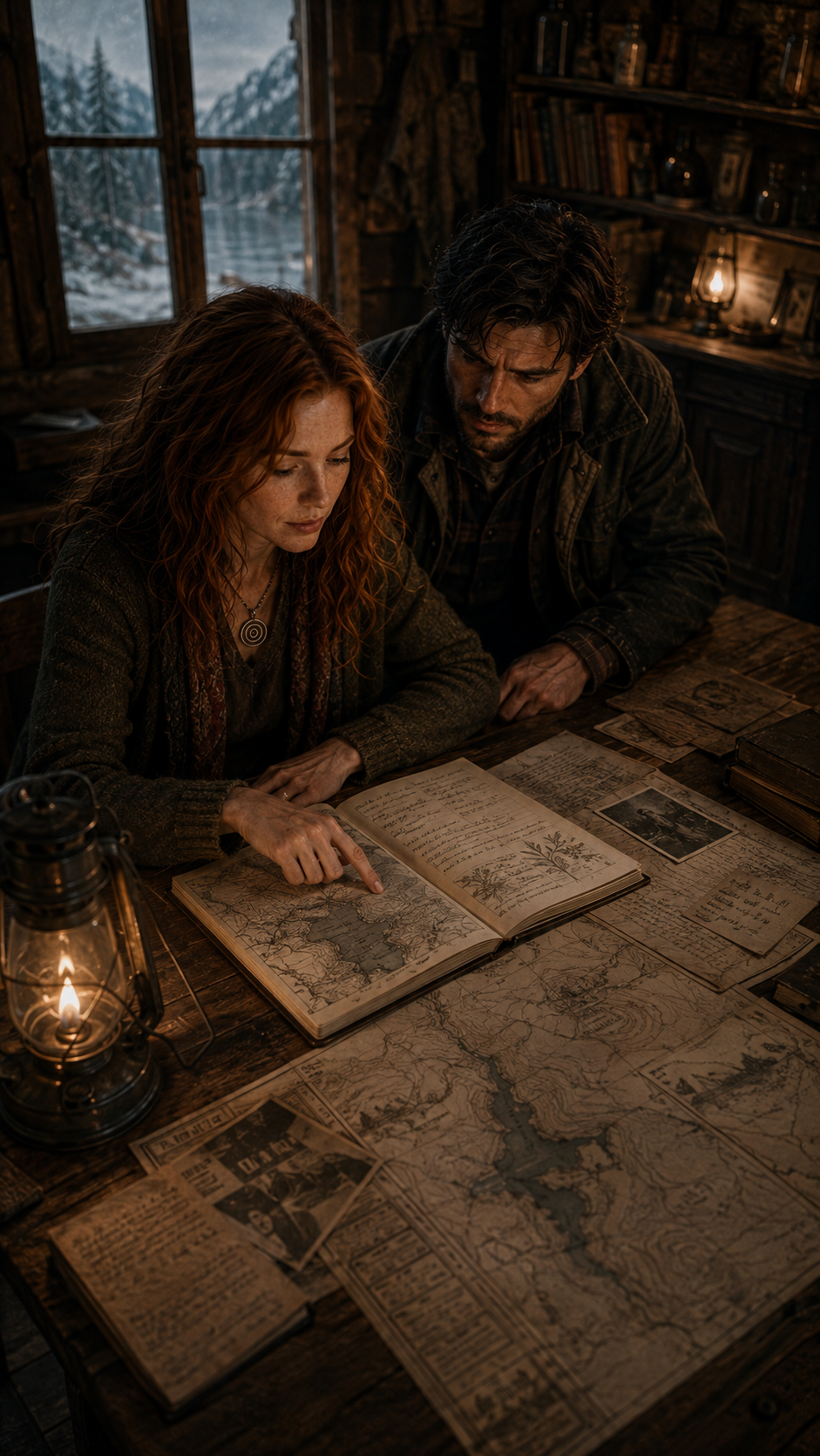
The words ASHEN LAKE were written across the top of the page. Beneath them, arrows connected names, dates, locations, and fragments of old reports in an arrangement that looked dangerously close to the beginning of a conspiracy board.
Elias studied it.
“It has arrows.”
“Arrows are efficient.”
“It has color coding.”
“Also efficient.”
“It looks like you’re tracking a serial killer.”
“I’m tracking a mystery.”
“That isn’t better.”
Rose slid a yellowed newspaper clipping toward him.
LOCAL HIKER MISSING NEAR ASHEN LAKE
The article described a young man who had failed to return from a solo hike. Search teams spent days combing the northern shoreline and surrounding forest.
No trace was ever found.
“That’s awful,” Elias said.
“It is.”
“But people get lost in the mountains.”
“They do.”
The lack of argument surprised him.
Rose placed another clipping beside the first.
Then another.
A hunter.
A fisherman.
A teenager on a camping trip.
A retired teacher.
Different decades. Different circumstances. The location remained the same.
Ashen Lake.
The reports included descriptions of strange lights, equipment failures, lost time, unusual dreams, and sounds no one else could hear. Authorities had dismissed most of them as stress, exposure, confusion, or the testimony of frightened people.
Individually, nearly everything could be explained.
Together, the stories carried a weight Elias did not like.
Rose pulled two photocopied statements from the notebook.
“These are the ones bothering me.”
The first was a typed interview dated 1958. Most of it concerned a volunteer who became separated from a search party near the lake after sunset.
Rose had underlined one sentence:
There was something underneath the silence.
Elias read it twice.
Rose placed the second page beside it.
The statement had been handwritten in 1987 by a completely different witness describing an unrelated disappearance.
One sentence had been circled:
I could hear something underneath the silence.
Elias looked at Rose.
“That’s strange.”
“I know.”
“Could’ve come from the same local story.”
“I thought that too. I haven’t found any connection between them.”
“Maybe whoever gave the second statement had heard about the first.”
“Maybe.”
“You hate that word.”
“I hate it less when it’s accurate.”
Rose removed another document.
Unlike the newspaper clippings and county records, it carried no recognizable letterhead. Most of the original heading had been covered by a thick black rectangle.
Only the date remained visible.
1958.
Near the bottom, beside a case number, someone had stamped a small geometric mark: three broken arcs surrounding an empty center.
Elias tapped it.
“What is that?”
“I was hoping you could tell me.”
“Why would I know?”
“You know strange radio symbols.”
“That isn’t a radio symbol.”
Rose smiled faintly. “Then we’ve already learned something.”
“I wouldn’t go that far.”
“I found the same mark in another copied report from the sixties.”
“Where did this document come from?”
Her smile disappeared.
“That’s the strange part.”
Elias waited.
“I thought I copied it at the county archive. But when I went back through my notes, there was no record of it. No box number. No file request. Nothing.”
“You forgot to write it down?”
“Maybe.”
“You don’t sound convinced.”
“I usually write everything down.”
Elias looked again at the blacked-out heading and the broken-circle mark. They could have meant anything—or nothing.
“What are you trying to prove?”
Rose leaned back.
“I’m not trying to prove anything.”
“Then what are you doing?”
“Trying to understand.”
That was the difference between Rose and most people who chased mysteries.
She did not begin with an answer and force every clue to support it. She listened until the question revealed what shape it wanted to take.
“Ashen Lake keeps appearing,” she said. “In missing-person files, ranger notes, interviews, weather records, and local stories. People describe sounds no one else hears. Some dream about the lake before ever visiting it. Others keep returning to the same places without knowing why.”
“Returning how?”
“A hunter kept revisiting one section of forest because he said it felt important. The retired teacher disappeared after spending weeks going back to places from her childhood. One teenager reported hearing music no one else could hear.”
Elias glanced toward the open window as the wind chimes sounded again.
“You’re connecting unrelated events.”
“Maybe.”
That answer surprised him again.
Rose looked down at the pages.
“I don’t know what it means. I only know the same kinds of stories keep happening around the same place.”
“Confirmation bias?”
“Possibly.”
“You’re agreeing with me far too much.”
“I’m trying to be responsible.”
“That’s unsettling.”
A small smile appeared, but her attention remained fixed on the notebook.
Outside, clouds had begun gathering around Singer’s Ridge.
Dark shapes moved across the summit, slowly swallowing the remaining afternoon light.
Neither of them noticed yet.
Rose stared at the map of Ashen Lake.
Elias stared at Rose.
And beyond the warm kitchen, the first shadow of the storm began forming over the mountain
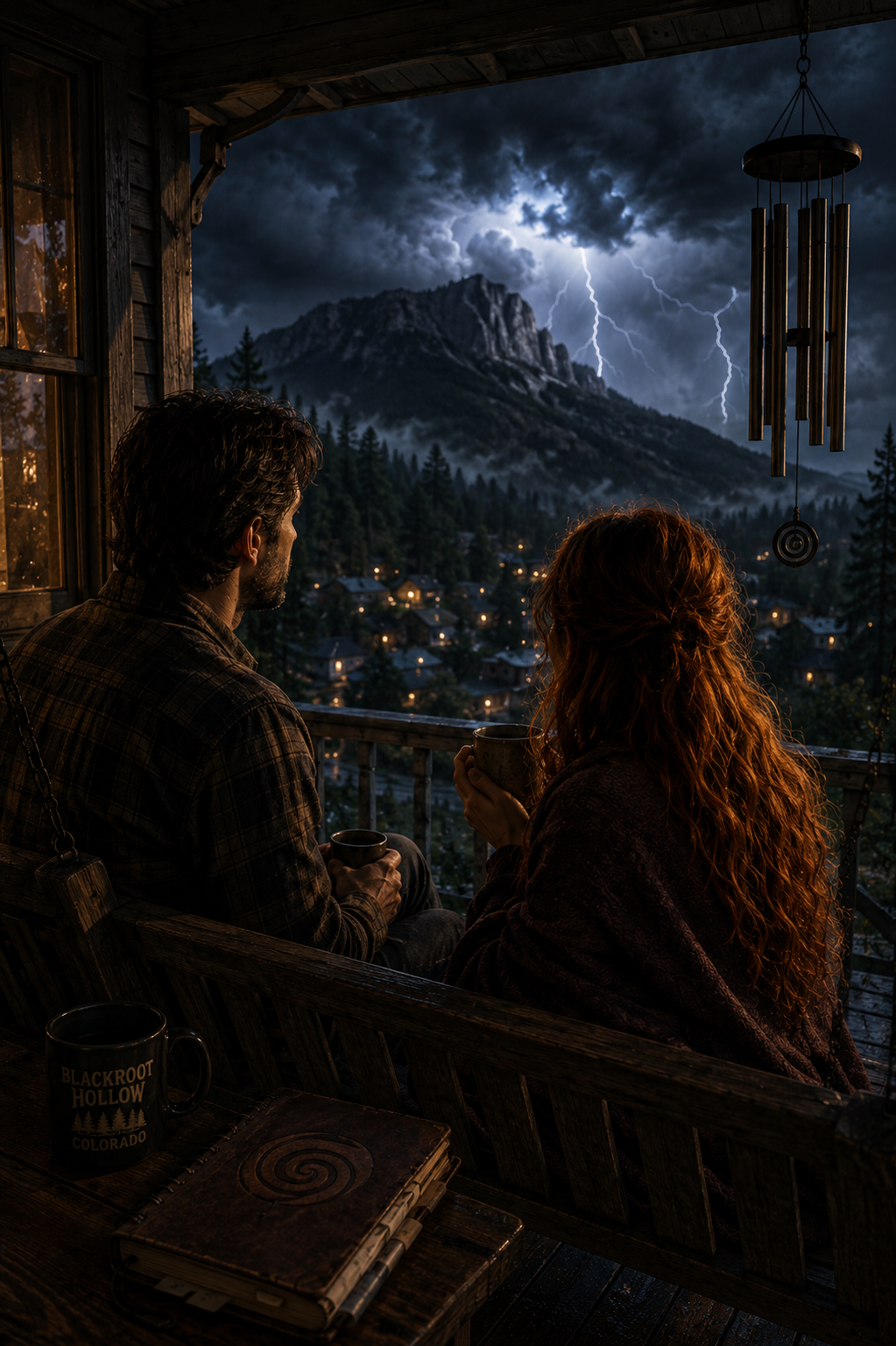
By the time Rose closed the notebook, evening had settled across Blackroot Hollow.
In the mountains, daylight did not disappear all at once. It withdrew slowly from the valley, leaving the highest ridges glowing long after the roads and rooftops below had fallen into shadow.
Singer’s Ridge held the light longest.
Its granite crown burned bronze against the darkening sky before the color finally faded and the mountain became a vast silhouette beyond the trees.
Rose stepped onto the porch wrapped in a light blanket.
Elias followed with two mugs—coffee for him, tea for her—and lowered himself beside her on the old wooden swing. The chains creaked beneath their weight.
For a while, neither of them spoke.
The valley stretched below them, scattered with the first lights of evening. Somewhere in town, a dog barked. The sound carried through the cool air before disappearing into the forest.
Above everything, Singer’s Ridge watched.
Elias had lived beneath it for most of his life. He could not remember a time when the mountain had not occupied the northern horizon, yet he rarely thought about it.
Rose seemed incapable of forgetting it was there.
“You know,” she said quietly, “people used to believe the mountain was alive.”
Elias took a drink of coffee.
“There it is.”
Rose turned toward him. “What?”
“The folklore.”
“You say that like it’s an illness.”
“It spreads through notebooks.”
“I’ll have you know that’s offensive to researchers.”
“Researchers don’t own color-coded conspiracy maps.”
Rose nudged him with her shoulder.
For another moment, they watched the last traces of daylight retreat across the ridge.
Then Rose said, “Some of the old stories claim certain places carry memories.”
Elias looked at her.
“Memories?”
“Not ghosts. Not exactly.”
She pulled the blanket more tightly around her shoulders.
“More like echoes.”
“Echoes of what?”
“People. Experiences. Important moments.”
The wind moved through the trees. A few dry leaves scraped across the porch.
“My grandmother used to say that important things leave marks,” Rose continued. “Not always visible ones. But marks all the same.”
“The mountain is a mountain.”
“It can be both.”
“No.”
Rose looked at him with patient disappointment.
“You’re impossible.”
“I’ve heard that before.”
“Usually from me.”
The wind chimes sounded above them.
A few clear notes drifted through the evening air.
Rose fell quiet and listened.
She did not make a performance of it. She simply gave the sound her full attention, the way she did with everything she loved and everything she did not understand.
Elias watched her.
“You hear things nobody else hears.”
Rose smiled.
“I hear things everybody else ignores.”
At the time, the words seemed harmless.
Later, Elias would remember them differently.
Clouds gathered beyond the northern horizon.
At first, they looked like ordinary mountain weather: dark shapes moving between the peaks, swallowing the remaining light. Then they began building around Singer’s Ridge itself.
The storm front rolled across the summit and spilled downward like a tide crossing stone.
Elias frowned.
“That wasn’t in the forecast.”
“The mountains don’t care about forecasts.”
Thunder answered several minutes later.
Low.
Distant.
Almost gentle.
Rose’s eyes remained fixed on the ridge.
Something changed in her expression.
“What?” Elias asked.
She hesitated.
“Nothing.”
“That’s never true.”
“I know.”
Lightning moved inside the clouds, illuminating them from within.
The wind shifted.
Colder now.
Sharper.
The surrounding forest responded as branches swayed and leaves whispered against one another.
The chimes sounded again.
This time, neither of them joked about whether they were singing.
Rose closed her eyes.
Elias studied her.
“What?”
She opened one eye. “Nothing.”
“You have the look again.”
“I hate that you can tell.”
“I know.”
Lightning flashed over Singer’s Ridge.
Thunder followed almost immediately.
The storm had reached the mountains.
Neither Elias nor Rose could have explained why its approach felt different from any other weather moving through Blackroot Hollow.
It was not fear.
Not yet.
Only awareness.
The sensation that something had begun moving toward them long before they noticed it.
The first drops of rain struck the porch railing.
Elias stood and collected the mugs.
“We should go inside.”
Rose remained seated for one final moment, staring at the mountain.
Then the wind chimes rang again.
Three clear notes.
Rose looked up sharply.
“What is it?” Elias asked.
She listened.
The notes faded into the growing storm.
Rose rose from the swing and followed him toward the door.
“Nothing,” she said.
But this time, she did not sound as though she believed it.
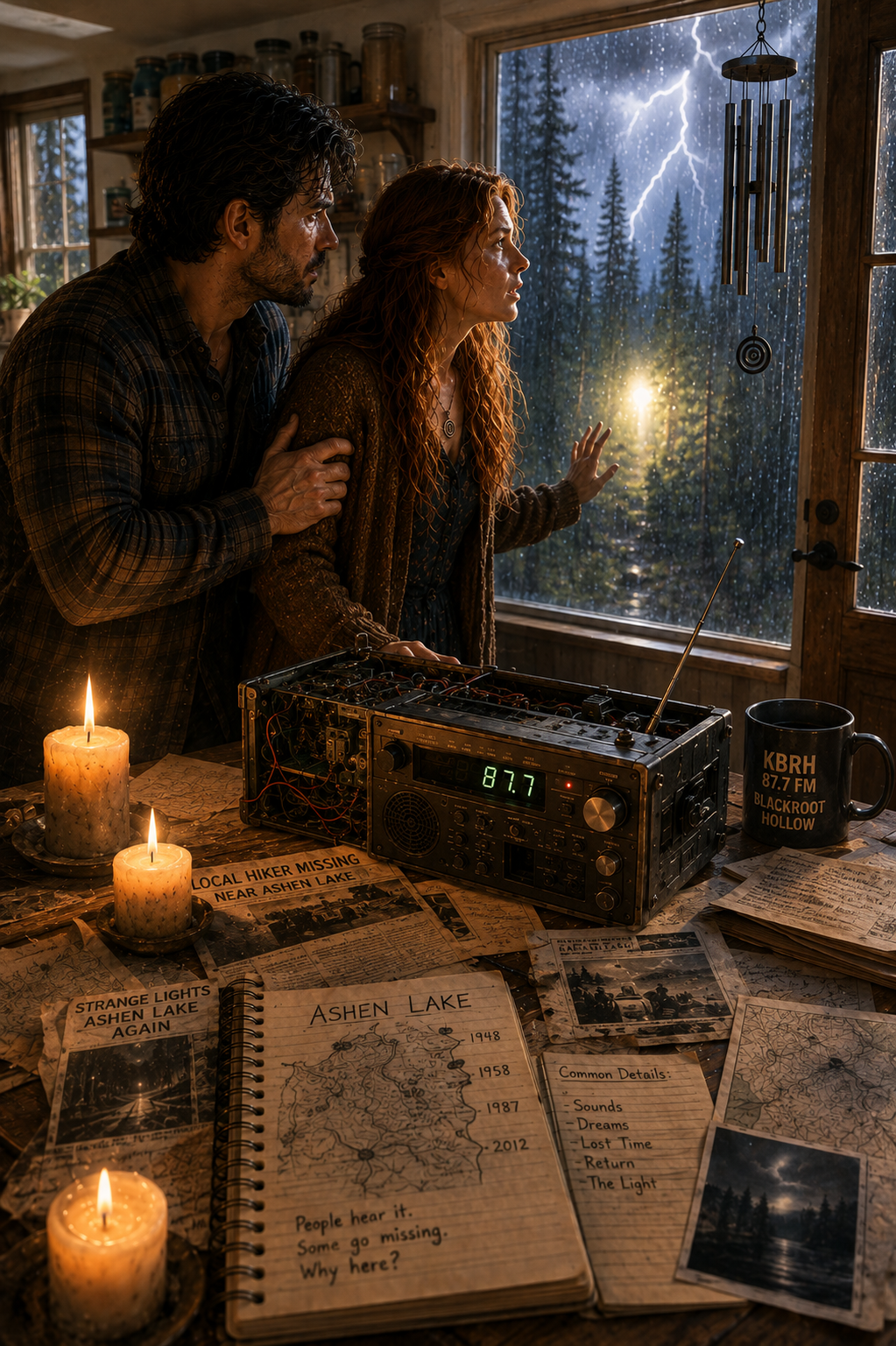
Rain followed them inside.
Not literally at first. Only its sound—the soft tapping against the kitchen windows, the whisper of water moving through the trees, the first distant rolls of thunder beyond Singer’s Ridge.
Elias set the mugs beside the sink.
Rose returned to the table.
Her notebook remained open where they had left it, surrounded by newspaper clippings, maps, and copied reports from Ashen Lake.
She turned one page.
Then another.
“You’re still thinking about it,” Elias said.
“The people in the reports.”
“What about them?”
“They noticed something was wrong before anything happened.”
Rose traced a line of notes with one finger.
“Some heard sounds. Some had dreams. Others kept returning to places without knowing why.”
The wind chimes rang outside.
Both of them looked toward the window.
Elias pulled out a chair. “You’re connecting unrelated events again.”
“Maybe.”
The uncertainty in her voice was different now.
Less academic.
More personal.
“Rose.”
She kept her eyes on the notebook.
“I never told you about the dreams.”
Thunder rolled over the house.
Elias sat across from her.
“What dreams?”
Rose folded her hands.
“The lake.”
“Ashen Lake?”
“I think so.”
“You’ve never been there.”
“I know.”
The rain grew heavier, streaking the windows and turning the yard beyond them into blurred shadow.
Rose described fog covering dark water.
A shoreline she somehow recognized.
Lights moving beneath the surface.
A sky that did not belong to the same world.
“And someone is there,” she said.
“Who?”
“I never see them.”
“Watching you?”
Rose shook her head.
“Waiting.”
“For what?”
“I don’t know.”
She looked toward the darkened window.
“Every time I wake up, I feel like I’ve forgotten something important.”
Lightning flashed.
The kitchen lights flickered once.
Then again.
At 10:43 p.m., the power failed.
The refrigerator stopped humming.
The microwave clock vanished.
Every familiar electrical sound disappeared, leaving only the storm and the rain striking the roof.
Elias found a flashlight and several candles.
A few minutes later, small flames spread warm light across the kitchen. Familiar objects became strange beneath the shadows. The windows turned into black mirrors, reflecting Elias, Rose, and the evidence scattered across the table.
Rose’s notebook no longer looked like research.
It looked like a warning.
A low tone moved beneath the storm.
Elias stopped.
Rose slowly raised her head.
“You heard that.”
He nodded.
The sound had been too steady for thunder and too deep for the wind. Elias had felt it through the floor before he understood he was hearing it.
Then it vanished.
“What was it?” Rose whispered.
“I don’t know.”
The tone returned.
Deeper this time.
The candle flames bent.
Every flame leaned toward the center of the kitchen as though pulled by an invisible current.
Elias stood.
“There’s no draft.”
The windows were shut. The doors were closed. Nothing in the room moved except the trembling light.
The tone deepened until Elias felt it inside his chest.
Then it stopped.
The candles straightened.
For several seconds, neither of them spoke.
Lightning flashed beyond the kitchen windows.
The rain stopped.
Not slowed.
Stopped.
Thousands of droplets hung motionless above the yard, suspended in the white light like pieces of glass.
Rose gasped.
Darkness returned.
The rain crashed against the house again.
Elias crossed quickly to the window.
“Did you see that?”
“Yes.”
“That’s impossible.”
Rose stepped beside him.
Her reflection stared back from the dark glass.
Another flash illuminated the yard.
Near the tree line, a human shape stood watching the house.
Elias froze.
“What?” Rose asked.
“Someone’s outside.”
“Where?”
The next flash revealed only trees and rain.
The figure was gone.
The wind chimes rang through the storm.
Three notes.
A pause.
Then four.
Rose went completely still.
The pattern repeated.
Three.
Then four.
Her expression changed.
Not fear.
Recognition.
“Rose?”
She took one step toward the front door.
Elias caught her gently by the shoulders.
“Where are you going?”
Rose blinked.
She looked at the door as if surprised to find herself facing it.
“I was listening.”
“To what?”
The chimes stopped.
Rose’s face tightened with confusion.
“I don’t know.”
Lightning exploded across the sky.
A pale white-gold light appeared between the trees.
It remained after the lightning faded.
Rain moved around the glow like mist around a lantern. It did not shine into the forest.
The forest seemed to have opened around it.
Rose moved toward the window.
“Don’t,” Elias said.
The light pulsed once.
Rose’s breath caught.
It pulsed again.
Tears gathered in her eyes.
“Finally,” she whispered.
Elias looked at her.
“What did you say?”
“Finally.”
She sounded relieved.
That frightened him more than the storm.
Rose pressed one hand against the window.
“I know this place.”
“You’ve never been out there.”
“I’ve been here before.”
“No, you haven’t.”
“I know the light.”
The low tone returned.
The Hum.
This time it did not come from the forest.
It came from the walls, the floor, the windows, and the air inside their lungs.
Rose closed her eyes.
Beneath the Hum, something else emerged.
Almost music.
Almost voices.
The partially disassembled receiver on the table clicked.
Elias turned.
The machine had no power cord connected.
Its casing remained open.
Its antenna had been removed hours earlier.
The dark tuning display flickered.
Then illuminated.
87.7
Static whispered from the speaker.
Broken voices rose through the noise—men, women, something that might have been a child—overlapping one another across impossible distance.
One voice surfaced for less than a second.
A man.
Urgent.
Elias caught only part of a word before the static swallowed it.
It sounded like—
fracture.
Then every voice vanished.
The receiver went dark.
Only the Hum remained.
Rose stared toward the front door.
“I think I’ve been hearing it for a long time,” she said.
“Hearing what?”
Her eyes met his.
“The signal.”
The Hum changed.
Until that moment, it had been a tone—deep, steady, and impossible to locate.
Now there was a pattern inside it.
Three notes.
Then four.
Rose’s face crumpled.
“Oh.”
The sound carried recognition, grief, and wonder all at once.
Elias stepped closer. “What?”
Rose looked toward him.
“I remember that.”
The front door moved.
Neither of them had touched it.
The deadbolt remained locked, yet the door opened an inch and cold air entered the house.
Elias crossed the kitchen and forced it shut.
He checked the lock.
Still secured.
For several seconds, nothing happened.
Then the deadbolt turned by itself.
Click.
The lock slid open.
“No.”
Elias locked it again.
Click.
It unlocked.
The door shifted inward as wind screamed through the narrow opening.
Elias threw his weight against it.
“Rose!”
She did not answer.
He looked back.
Rose stood in the center of the kitchen, perfectly still, listening as the hidden melody rose beneath the Hum.
Three notes.
Then four.
Her eyes filled with tears.
The door slammed open.
Wind exploded through the house.
The candle flames vanished. Rain swept across the entryway, scattering papers from Rose’s notebook across the floor.
For one impossible instant, the kitchen disappeared.
Elias saw a forest beneath two moons.
A ruined city beneath a violet sky.
An ocean reflecting unfamiliar constellations.
Silver-leafed trees glowing beneath pale light.
The images overlapped like reflections moving through shattered glass.
Then four figures appeared within them.
Two adults.
Two younger figures.
A family.
The smallest turned as though she could see him.
The vision changed.
An older man stood beside a fire beneath a sky Elias did not recognize. His face remained hidden, yet the sight struck Elias with the force of a forgotten memory.
The man began to turn.
Then everything shattered.
The kitchen returned.
Elias gasped.
Rose was staring at him.
“You saw them.”
He froze. “What?”
“The people.”
“How do you know?”
“I saw them too.”
Before Elias could answer, the white-gold light beyond the windows expanded.
The forest disappeared behind it.
The Hum filled the house.
Rose screamed.
Not in pain.
In recognition.
Then she pulled away from him and ran.
“Rose!”
She crossed the threshold barefoot and disappeared into the storm.
Elias lunged after her.
Rain struck his face as he reached the porch. Wind tore through the yard, bending branches and swallowing his voice.
“ROSE!”
She was thirty feet ahead of him.
Then forty.
Then sixty.
The yard stretched between them.
Elias ran harder, boots sliding through mud as the distance continued growing. The forest seemed to retreat while Rose moved closer to it.
“ROSE!”
She reached the tree line.
The storm stopped.
Rain froze in the air.
Thousands of droplets hung motionless around them. Thunder ceased in the middle of a roll. The wind vanished.
The world became silent.
Elias stopped, struggling to breathe.
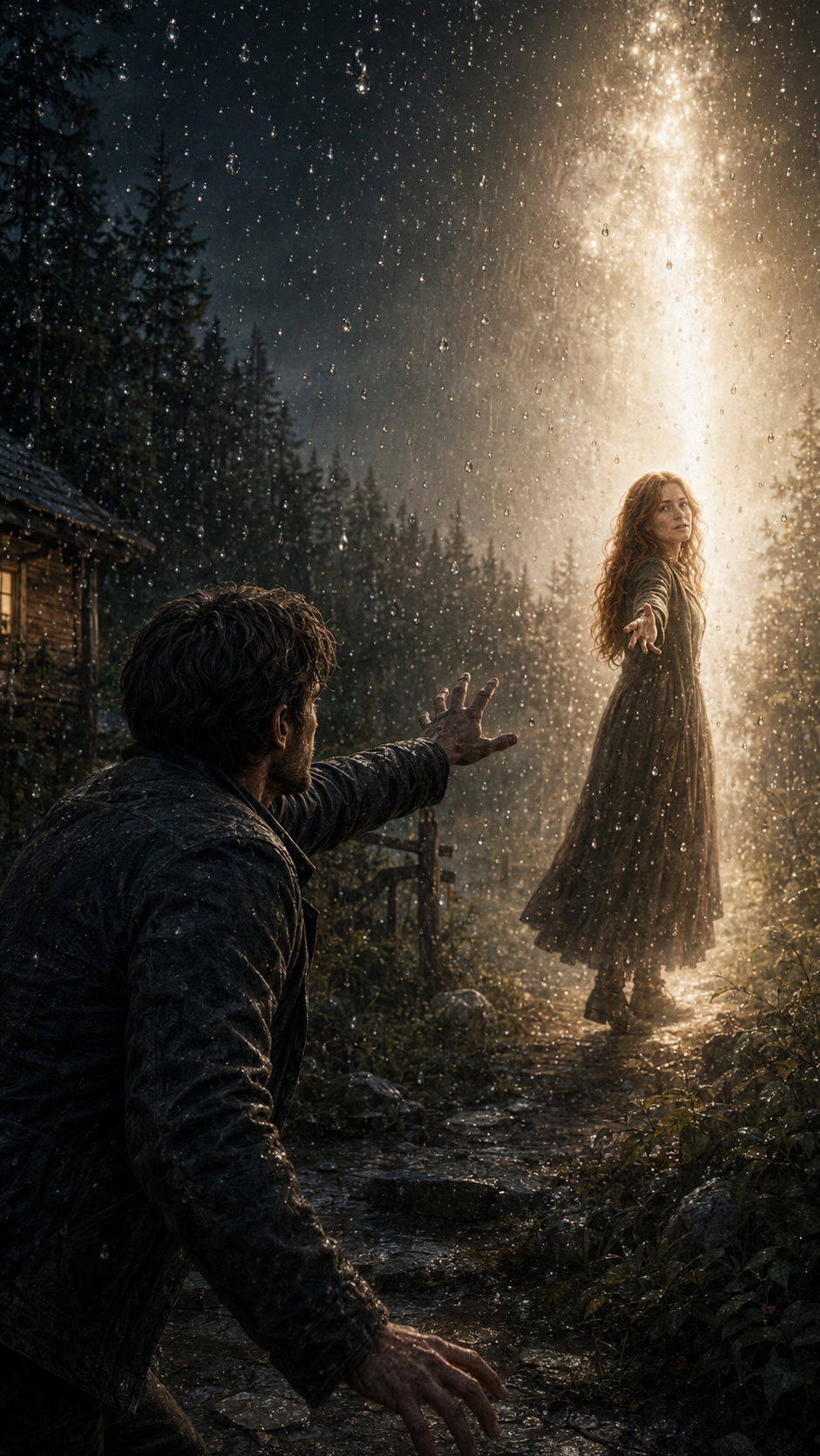
Rose stood beneath the white-gold light.
Slowly, she turned.
For one final moment, Elias saw only Rose.
Not the researcher chasing forgotten stories.
Not the woman drawn toward Ashen Lake.
His Rose.
The woman who stole his coffee even though she hated it.
The woman who filled notebooks with impossible questions.
The woman who believed wind chimes might be singing.
The woman who had made ordinary life feel extraordinary.
Her lips trembled.
Elias took one step toward her.
“Come back.”
Rose smiled.
Small.
Sad.
Full of love.
“I’m trying.”
The words barely crossed the silence.
Elias moved toward her.
The light intensified.
Rose lifted one hand—not waving goodbye, but reaching.
Elias reached back.
For one impossible second, he believed their fingers might touch despite the distance between them.
Then reality separated.
Behind Rose, the forest folded into impossible depth.
Trees stretched into unfamiliar shadows. Stars appeared where branches should have been. Other worlds flickered behind her—the violet sky, the silver ocean, the glowing forest, the four distant figures.
One of the younger figures turned.
Elias almost saw her face.
Then the vision collapsed.
Only Rose remained.
The light surrounded her.
Love and fear filled her expression, along with an apology she had no time to speak.
“No.”
Elias ran.
The light expanded.
“NO!”
Rose vanished inside it.
The world became white.
Then darkness returned.
Rain crashed down.
Wind struck Elias hard enough to stagger him.
Thunder resumed.
Rose was gone.
One moment she had stood beneath the trees.
The next, there was only the storm.
“Rose?”
Elias reached the tree line.
He searched behind trunks, through the brush, and down the steep slope beyond the yard.
No footprints.
No broken branches.
No path.
No light.
No sign that Rose had ever been there.
“ROSE!”
He shouted until his throat burned.
No answer came.
Only rain.
Only darkness.
Only the wind chimes sounding faintly behind him.
Three notes.
Then four.
By sunrise, half of Blackroot Hollow was searching for Rose Vance.
Neighbors arrived first.
Then sheriff’s deputies.
Then volunteers carrying flashlights, ropes, radios, blankets, and the determined expressions people wore when they still believed effort could overcome the impossible.
Search teams spread outward from the house.
They crossed the yard, entered the forest, and followed every route leading toward the high country. They checked drainage channels, creeks, abandoned buildings, steep slopes, and old trails disappearing beneath the trees.
Dogs were brought in.
They found no scent beyond the property.
No footprints continued from the tree line.
No broken branches marked her path.
No clothing.
No blood.
No evidence that Rose had fallen, been taken, or walked away.
Elias returned again and again to the place where the light had surrounded her.
He showed them exactly where she had stood.
“There,” he said.
Every time.
“She was right there.”
The ground gave them nothing.
The storm became its own mystery.
County records showed rain but no severe-weather warning. Weather stations recorded no lightning activity matching what Elias described. The measured wind could not explain the damage around the house.
Even the neighbors remembered different versions of the night.
Some recalled thunder shaking their windows.
Some remembered only rain.
Others insisted the valley had been almost silent.
No two accounts described the same storm.
The official explanations arrived quickly.
Disorientation.
Exposure.
An accident in difficult terrain.
A possible emotional crisis.
Elias rejected all of them.
Then the questions changed.
Had Rose been unhappy?
Had they argued?
Had she spoken about leaving?
Was she taking medication?
Was there someone else?
Every question felt like an attempt to turn Rose into someone he would not recognize.
He answered anyway.
For days.
Then weeks.
The searches continued until hope became procedure.
Procedure became obligation.
Obligation became silence.
Rose’s photograph appeared in storefront windows, on telephone poles, and across bulletin boards at the sheriff’s office and KBRH.
MISSING
ROSE VANCE
LAST SEEN NEAR HER HOME OUTSIDE BLACKROOT HOLLOW
People lowered their voices when Elias entered a room.
At first, they told him they would find her.
Later, they told him to keep hoping.
Eventually, they stopped mentioning her at all.
The world continued.
Snow covered the valley.
Spring thawed the roads.
Summer returned.
Autumn painted the slopes gold.
Again and again.
Singer’s Ridge remained above Blackroot Hollow as though nothing had happened beneath it.
The official case grew cold.
Elias did not.
He preserved Rose in the smallest places.
Her tea remained in the cabinet.
Her notebooks stayed where she had left them.
A chipped blue mug sat apart from the others.
He kept making too much coffee.
For years, he told himself it was habit.
He knew better.
The wind chimes still hung outside the kitchen window.
Whenever they sounded at night, Elias stopped whatever he was doing and listened.
Sometimes they rang randomly in the mountain wind.
Sometimes he thought he heard the pattern.
Three notes.
Then four.
It was never clear enough.
The radio remained on the kitchen table for months before Elias finally carried it to KBRH. He repaired every component, replaced damaged wiring, tested the receiver again and again.
It behaved like an ordinary machine.
No static voices.
No impossible frequency.
No Hum.
Nothing at 87.7 that should not have been there.
Elias kept listening anyway.
The years that followed became measured by absence.
Birthdays.
Anniversaries.
Holidays.
Rooms that stayed too quiet.
Memories returning without warning.
Rose stealing his coffee.
Rose listening to the chimes.
Rose standing beneath the light with one hand reaching toward him.
Most of all, he remembered her final words.
I’m trying.
Elias never believed she had died in the forest.
He could not prove what he had seen, but he carried one certainty no official report could erase.
Rose had not simply disappeared.
She had gone somewhere.
Seven years passed without another sign.
No light.
No voice.
No storm.
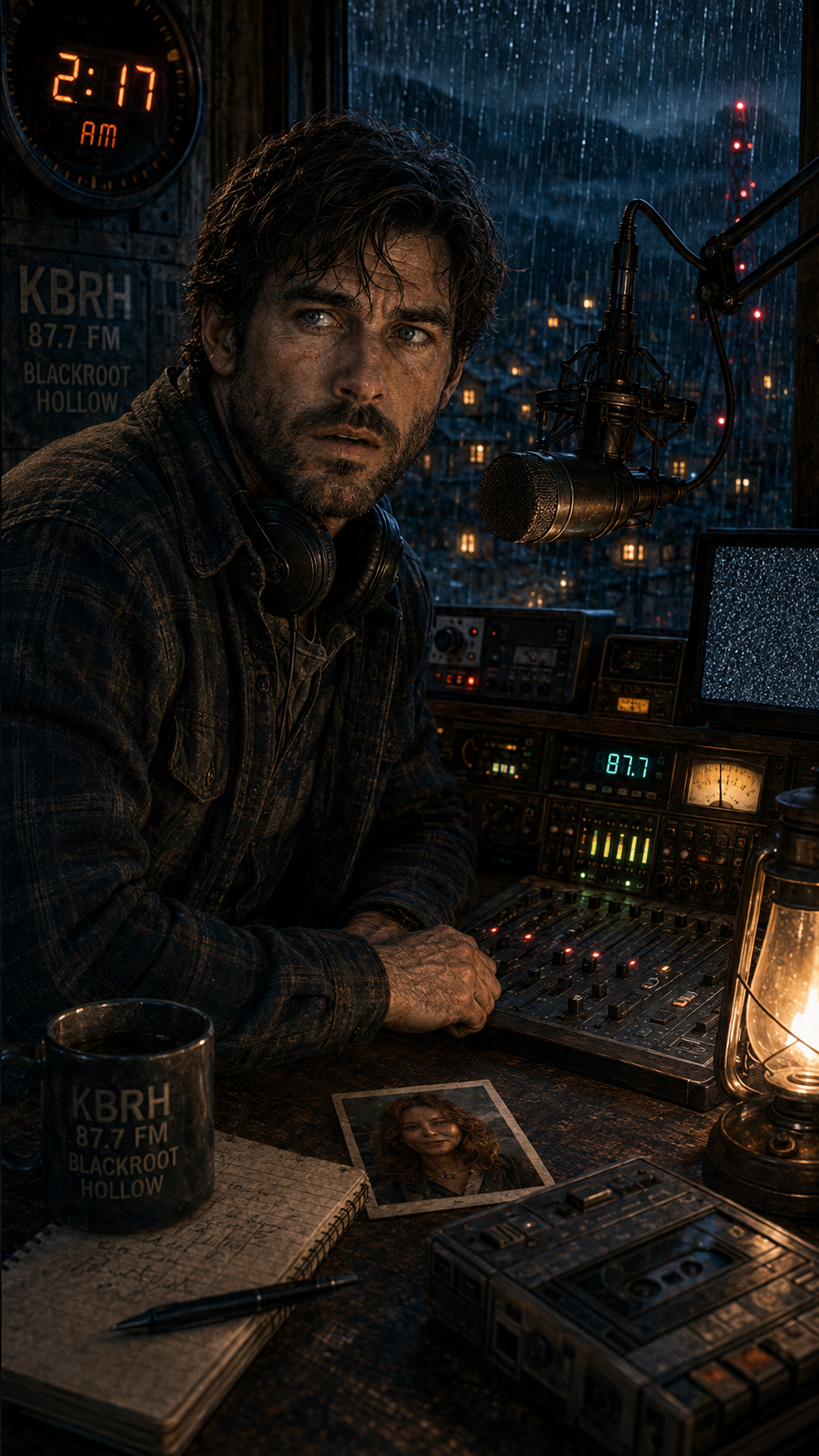
Then, one rainy night at KBRH, a low tone moved beneath the music.
The station clock changed.
2:17 a.m.
Every monitor went black.
And through the dead frequency, someone whispered his name.